
Blog
Subscribe to our NEWSLETTER to receive news, updates, and valuable tips.

The $500,000 Roth Conversion Question Everyone's Asking Wrong
The Headline Sounds Simple. The Calculation Is Not.
A question is circulating that sounds like a tax hack: convert $500,000 to a Roth account this year without ever touching the 35% bracket.
There's no universal answer — only a calculation. And for most high-income taxpayers, it doesn't cooperate.
But That's Not the Real Question
A Roth conversion moves pretax retirement money into a Roth account. In the year of conversion, that amount is generally taxed as ordinary income — at whatever rate applies to where it lands in your bracket structure. No discount. No loophole.
So the real question isn't "can I avoid 35%." It's "how much room do I have before I hit it?"
The Bracket Is Only the Beginning
For 2026, the top of the 32% bracket — the ceiling before 35% begins — is $512,450 of taxable income for married couples filing jointly, and $256,225 for single filers (IRS Rev. Proc. 2025-32).
Conversion capacity = top of target bracket − taxable income before the conversion.
A married couple with $150,000 of other taxable income has about $362,450 of room — not $500,000. Converting the full $500,000 anyway pushes roughly $137,550 into the 35% bracket.
Important: entering that bracket doesn't tax the whole conversion at 35%. Only the portion inside that bracket is taxed at that rate — the rest is taxed at the lower rates below it.
The Hidden Cost of a Large Conversion
Staying under 35% doesn't mean the conversion is cheap. Other thresholds matter more for many people:
Medicare IRMAA: surcharges begin at $109,000 MAGI (single) / $218,000 (MFJ) for 2026, based on income from two years prior.
Net Investment Income Tax: a conversion isn't NII itself, but raising MAGI can pull other investment income into the 3.8% NIIT above $200,000 (single) / $250,000 (MFJ).
Social Security taxation, state income tax, and the cash needed to actually pay the bill all deserve a look before converting.
Why a Multi-Year Strategy May Be Stronger
Converting $500,000 in one year is rarely the most efficient path, even when it's technically possible. Spreading conversions across several years can mean filling — not overflowing — your target bracket each year, and keeping more control over Medicare premiums and other income triggers.
Conversions tend to make more sense in a temporary lower-income year, before RMDs begin, after a market downturn, or when there's a long time horizon before the funds are needed.
Execution Notes
RMDs generally must be satisfied before the remaining balance is eligible for conversion. Completed conversions generally can't be reversed. Paying the tax from outside funds preserves more inside the Roth. Confirm processing deadlines well before year-end.
The Bottom Line
Converting $500,000 without entering the 35% bracket is possible only in narrow circumstances — usually when other taxable income is unusually low. That's not a flaw in the strategy; it's a reason to ask better questions: How much room is left in my target bracket? What's the real tax cost, including Medicare and NIIT? Would a smaller, multi-year conversion serve me better?
A Roth conversion is not a loophole. It's a bracket-management decision that belongs inside a coordinated, multi-year tax strategy.
The goal is not to convert the largest possible amount. The goal is to convert the right amount, in the right year, for the right long-term reason.
FAQ
Is there a limit on how much I can convert in one year? No IRS limit exists — the practical limit is the tax cost.
Is my whole conversion taxed at 35% if I enter that bracket? No. Only the portion inside that bracket is taxed at 35%.
Can I undo a conversion if the tax bill is too high? Generally no — conversions can no longer be reversed through recharacterization.
Does converting affect Medicare premiums? Yes — it raises MAGI, the figure used to set IRMAA surcharges two years later.
Is a multi-year strategy always better? Not always, but it often gives more control over brackets, Medicare, and cash flow.
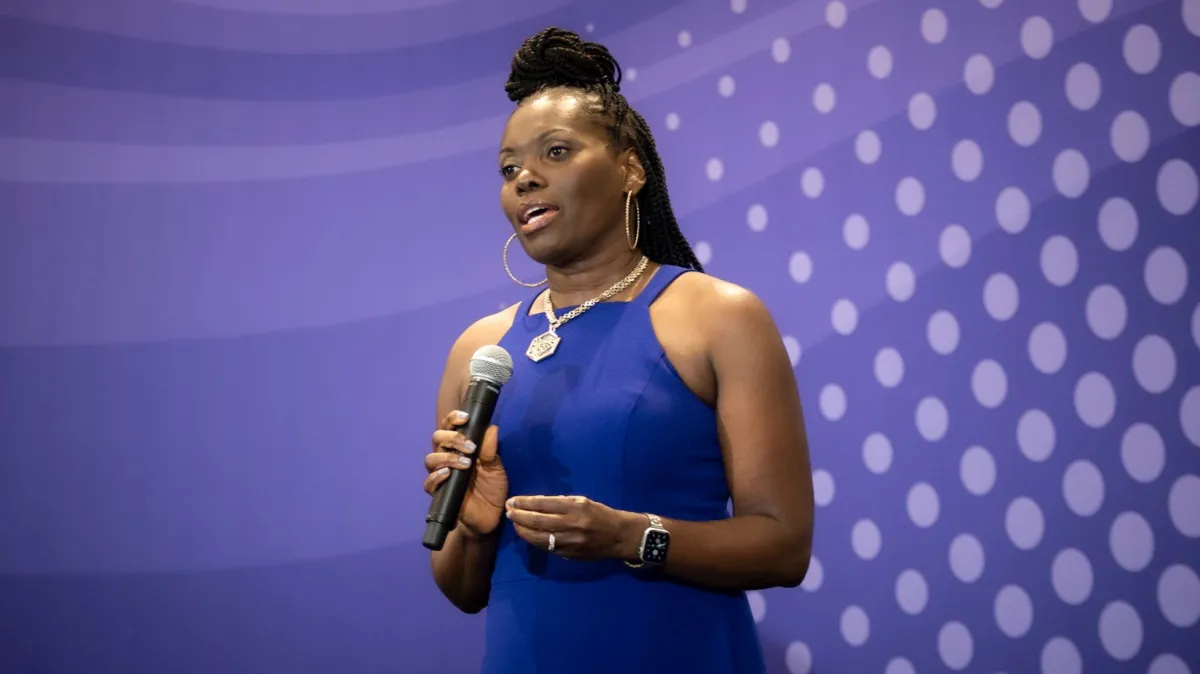
A Roth conversion touches your bracket, your Medicare premiums, and your long-term retirement plan at once. Sharon Eason, CPA, helps clients build coordinated, multi-year tax strategies — so decisions like this are made with the full picture, not a single number.







Schedule your call today at
(866) 721-5356




ASK QUESTION

SEND A FILE

SUBSCRIBE
Fill out this form and let us know how we can be of service.
We will offer you a complimentary consultation to determine how we can best serve you.



Ready to Keep More of What You Earn?
Start With Tax Strategy
Discover how much you could be saving with proper tax strategy. Proper tax strategy typically uncovers $500K or more in tax reductions and savings opportunities.
© 2026 Chase Eason & Associates, Inc.
100 South Bedford Road, Suite 340, Mt. Kisco, New York 10549